Pre-trip Inspection for Professional Truck Drivers

The Problem
One Oak Logistics started to get an increase in number of violations. The drivers were certified and experienced, but while performing the needs analysis, I figured out that this was due to negligence in conducting proper pre-trip inspections and not having a handy checklist document for a quick reference.
The Solution
After careful analysis with the client, I figured out that the basics need to be reiterated and an eLearning course that includes real-world setting and personalized scenarios that the company encountered recently, will help them understand the importance of conducting pre-trip inspections while being mindful.
The focus of this training was to help the learners make a connection and practically use problem-solving skills.
My Process
(Select the title to see the storyboard.)
I drafted a text-based storyboard to serve as a blueprint for my final product.
I designed this backwards in order to get the maximum result for the end goal.
To best help the learners meet the established performance goal, I prioritized the main features I wanted to include in the experience. It was important that the final product included observational learning and some examples from their real life that they can connect to.
The learner would watch the consequence scenario play out for incorrect choices, learn from it, and try again.
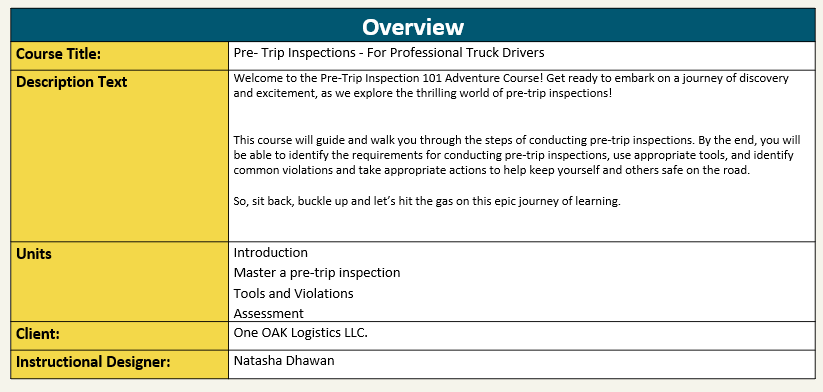
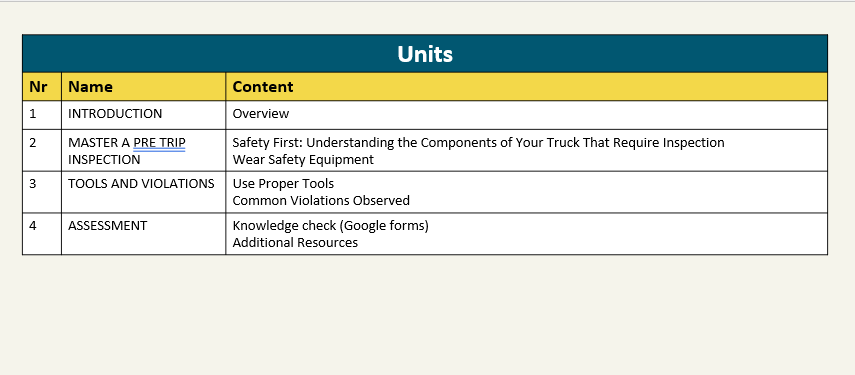
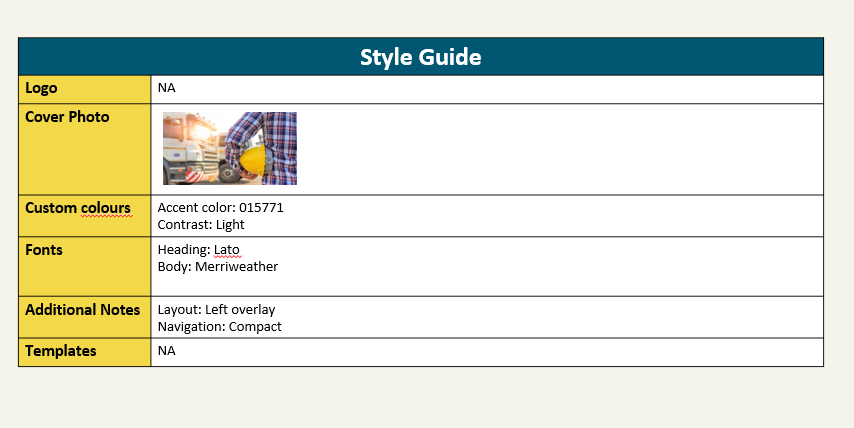
In the experience, the learner ensures to inspect each component of the truck.
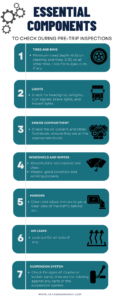
The ‘Essential Components’ document was designed for visual learners to understand better so they may not have to go back and forth in the labeled graphic if they just need to go back to refer to it.
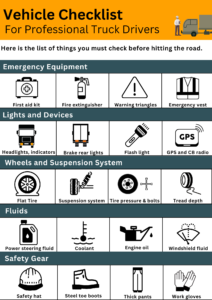
The ‘Vehicle Checklist’ job aid was designed to be printed out and be kept in each truck. I ensured that the white space and graphics balanced out cohesively to improve on legibility and readership. This feature makes the resource more accessible for the learner and helps support the continuation of their learning from the course.
The assessment was carefully designed to check the learning and skills that were acquired during the course. The questions were designed using the VIPERS strategy. During the course, multiple scenarios with revised activities were used as a summative assessment followed by a final formative assessment that measured the results according to the performance goal.
V= Vocabulary, I= Inference, P= Prediction, E= Explanation, R= Retrieval, S= Sequence.
They were asked to define, apply knowledge, make decisions, and infer based on the situations provided.
Results & Takeaways
The client loved the visual design of the infographics and the way the interactive elements were incorporated throughout the program. Users reported the program as “engaging” and “easy to follow”. The client believes the training will be “widely useful in the field” and will be helpful in meeting their ultimate goal of eliminating accidents caused by ignorance of conducting pre-trip inspections. They
I gained quite a few takeaways about the instructional design process throughout working on this project. I will take these lessons with me as I continue to upskill and work on more learning experiences to showcase my skills.
Reasoning: Before trying each concept, I asked myself if this will this help keep the learner engaged in the scenario and, how this change would enhance the learning experience. By considering, I ensured that all of my decisions were made for the learner and not for myself.
Repetition for Retention: I learnt how important repetition was for retaining information. The learners need to revisit important information from time to time and link previous information to the new one.
